
NGORONGORO CONSERVATION AREA
SET OFF ON A SAFARI TO NGORONGORO CRATER
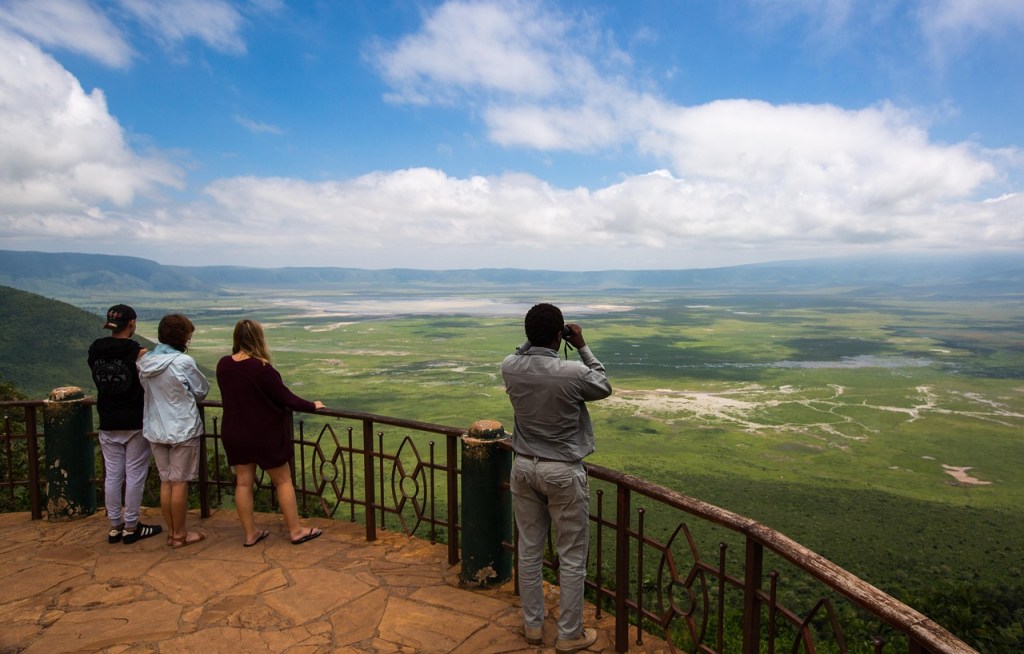
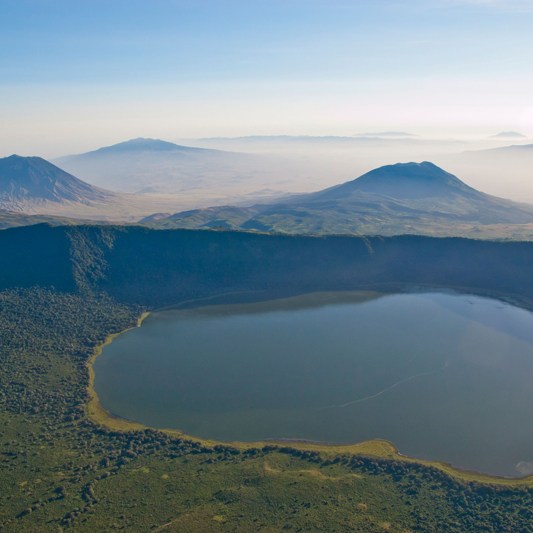
Take a safari across the Ngorongoro Conservation Area with Mkuyu Safari! Discover the Olduvai Gorge, its three magnificent volcanic craters, and its vast savannah, forest, and bushland. This distinctive location serves as the tourism industry’s flagship and is arguably Tanzania’s second most visited safari destination, behind Serengeti National Park.
Measuring 8,300 square kilometers, Ngorongoro Conservation Area (NCA) is also the only place on earth where man and wild animals harmoniously co-exist. The NCA was declared a World Heritage Site by UNESCO in 1979. Originally part of Serengeti National Park in 1951 when established by the British, the Ngorongoro Conservation Area Authority (NCAA) was formed in 1959, separating it from the Serengeti. The land inside the area is multi-use, providing protection status for wildlife while also permitting humans to live there. The NCA is where man, livestock and wild animals live in peace, which makes it unique. Zebras can sometimes be seen grazing alongside Maasai cattle on the grassland—what more could you ask from a Tanzania safari?


NGORONGORO CONSERVATION AREA IS A WORLD HERITAGE SITE
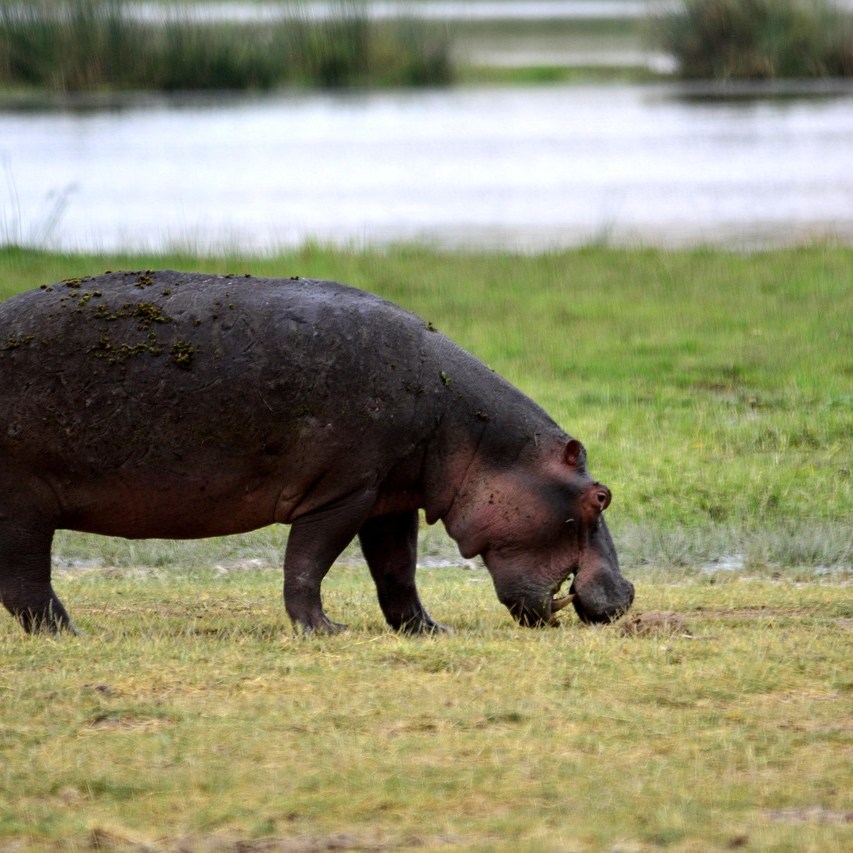
The NCA’s wildlife and land has been a UNESCO site since 1979, and now its cultural heritage is to be included. It’s the only site in the world with human communities and a high concentration of wildlife living in harmony. The multiple land use systems are among the earliest to be established around the world as a way to reconcile conserving natural resources and human development. The Ngorongoro Conservation Area also contains many archaeological, paleontological and anthropological sites of exceptional quality. If you’re interested in the cultural offering of traveling in Tanzania, and the Ngorongoro Crater in particular, you should check out our unique Tanzania Safari Experiences. You have the opportunities to meet the people of Tanzania, either having experiences that positively impact their lives or simply learning about their culture first hand in a sensitive and responsible way.


WILDLIFE ON A NGORONGORO SAFARI
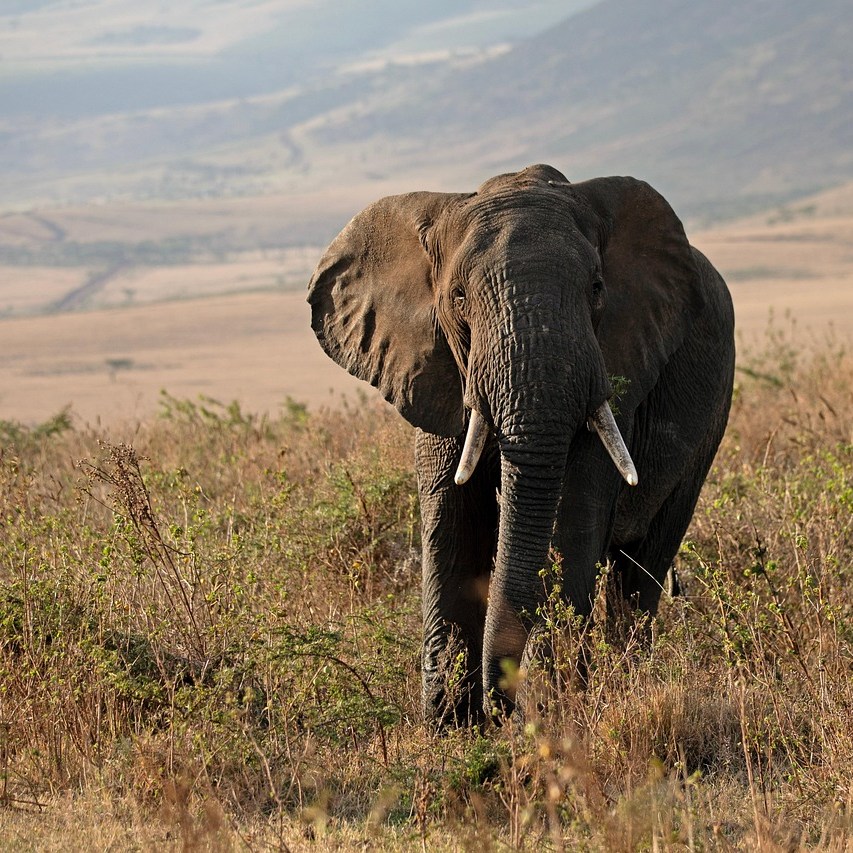
The Ngorongoro Conservation Area contains over 25,000 large animals including approximately 26 black rhinoceros (the exact number is unknown in order to protect them). Higher up in the rainforests of the crater rim you’ll find large elephants, leopards, mountain reedbuck, buffalos, rare wild dogs, spotted hyenas, jackals, cheetahs, and other felines. The crater also has the densest-known lion population.
Also making its way through Ngorongoro is the annual zebra and wildebeest migration, when approximately 2 million ungulates move south into the area in December then move back out in June to head north. The migrants passing through the plains of the NCA include 1.8 million wildebeest, 200,000 zebra, and 350,000 gazelles. To the west, the Lake Ndutu area has a large population of cheetah and lion. Over 500 species of bird have also been noted within the Ngorongoro Conservation Area, including white pelican, ostrich, and greater and lesser flamingo on Lake Magadi within the crater and Lake Ndutu.
THE NGORONGORO CRATER IS WHERE HUMAN LIFE BEGAN
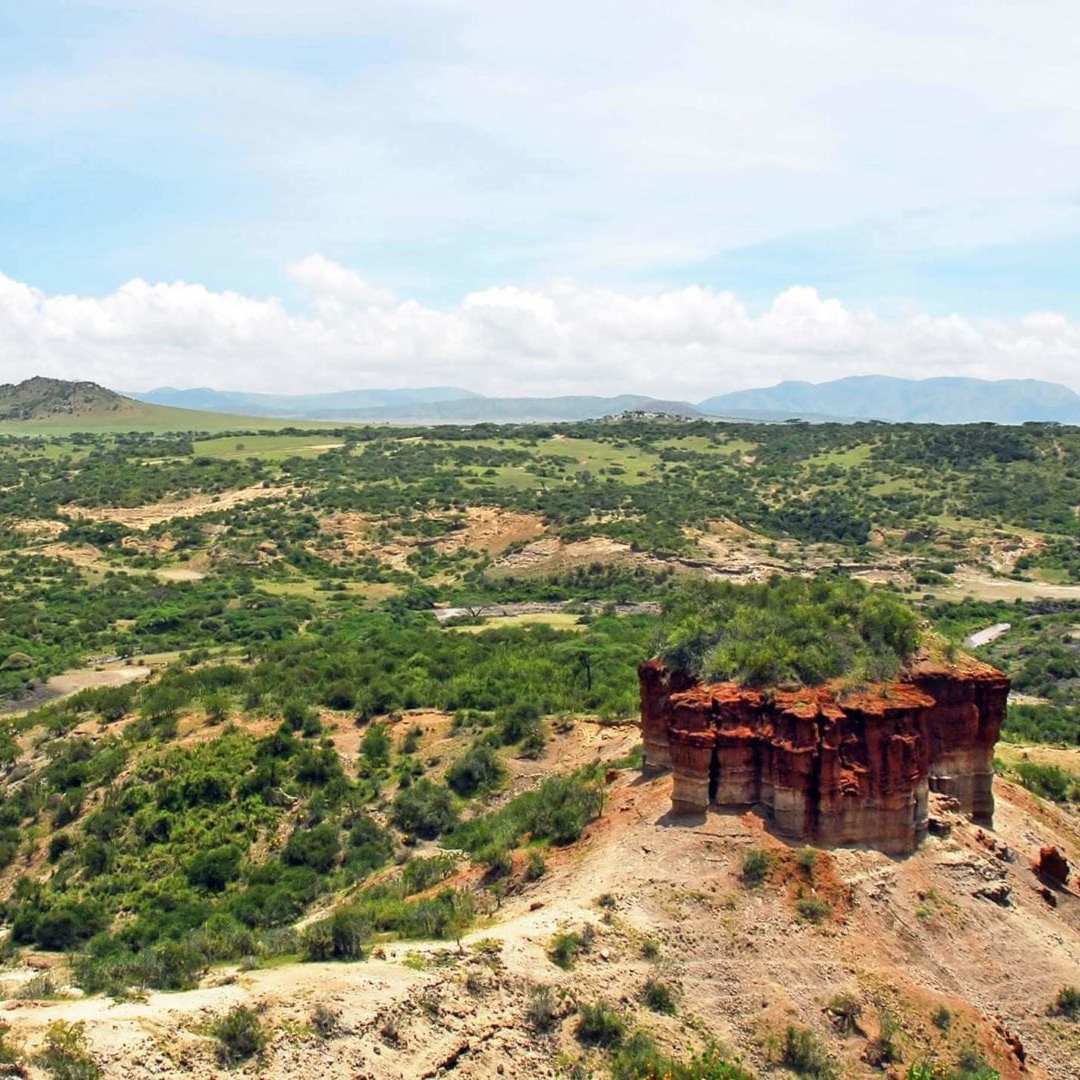
At the far end of the NCA stands the archaeological site Olduvai Gorge, widely regarded as the cradle of mankind and the most important prehistoric site in the world.
The earliest remains of homo sapiens were discovered here by Dr. Louis and Mary Leakey over 50 years ago and anyone with an interest in mankind’s ancestors will be fascinated by this extraordinary place. Look in wonder at the rugged landscape and explore their quaint little museum. This paleo-anthropological site is a steep-sided ravine in the Great Rift Valley composed of two branches that have a combined length of about 48 km and are 90 meters deep. A treasure trove of fossil remains have been yielded by the deposits exposed in the sides of the gorge cover. Based on the evidence discovered at Olduvai Gorge, it’s believed that a number of hominid species have continuously lived in the crater for the last three million years. The gorge is named after the Maasai word for the wild sisal plant: oldupaai.


Please get in touch with us if you have any queries concerning Ngorongoro Conservation or how we can design a genuinely customized Tanzanian safari that includes a stop at this amazing location. For what reason are you waiting? Begin organizing your once-in-a-lifetime safari vacation in Tanzania!
 Mkuyu Safari